How to Identify Safe and Hygienic Sanitary Pads
How to Identify Safe and Hygienic Sanitary Pads
The selection of the appropriate sanitary pad is not only a matter of comfort, but it has a direct effect on intimate health, the safety of the skin, as well as the entire menstrual health. Because there is a large variety of products offered in the market, it may be confusing to find out which sanitary pads are really safe and hygienic. Not all pads are equally produced with the same materials and quality, and improper use of the product can result in irritation, discomfort, or infection.
The knowledge on how to assess the sanitary pads in terms of their safety, materials, and hygienic standards assists people in making decisions that are well-informed and effective. This is a guide that describes the aspects to consider when buying sanitary pads that are health and comfort-promoting.
Why Sanitary Pad Safety Matters
Sanitary pads come into close contact with sensitive skinfor several hours at a time. When a pad has harsh chemicals, low-quality absorbent materials, and synthetic fragrances, it disrupts the natural balance of the intimate area.
Poor or unsafe pads can lead to:
Redness, itching, or skin rash.
Allergic reactions
Excess moisture causes the growth of bacteria.
Pain when wearing for long hours.
Safe, hygienic sanitary pads save these risks and make menstruation much more comfortable for people whose skin is sensitive or whose flow is heavy.
Check the Materials Used in the Pad
One of the most important indicators of a safe sanitary pad is its material composition.
Prefer Soft, Skin-Friendly Top Layers
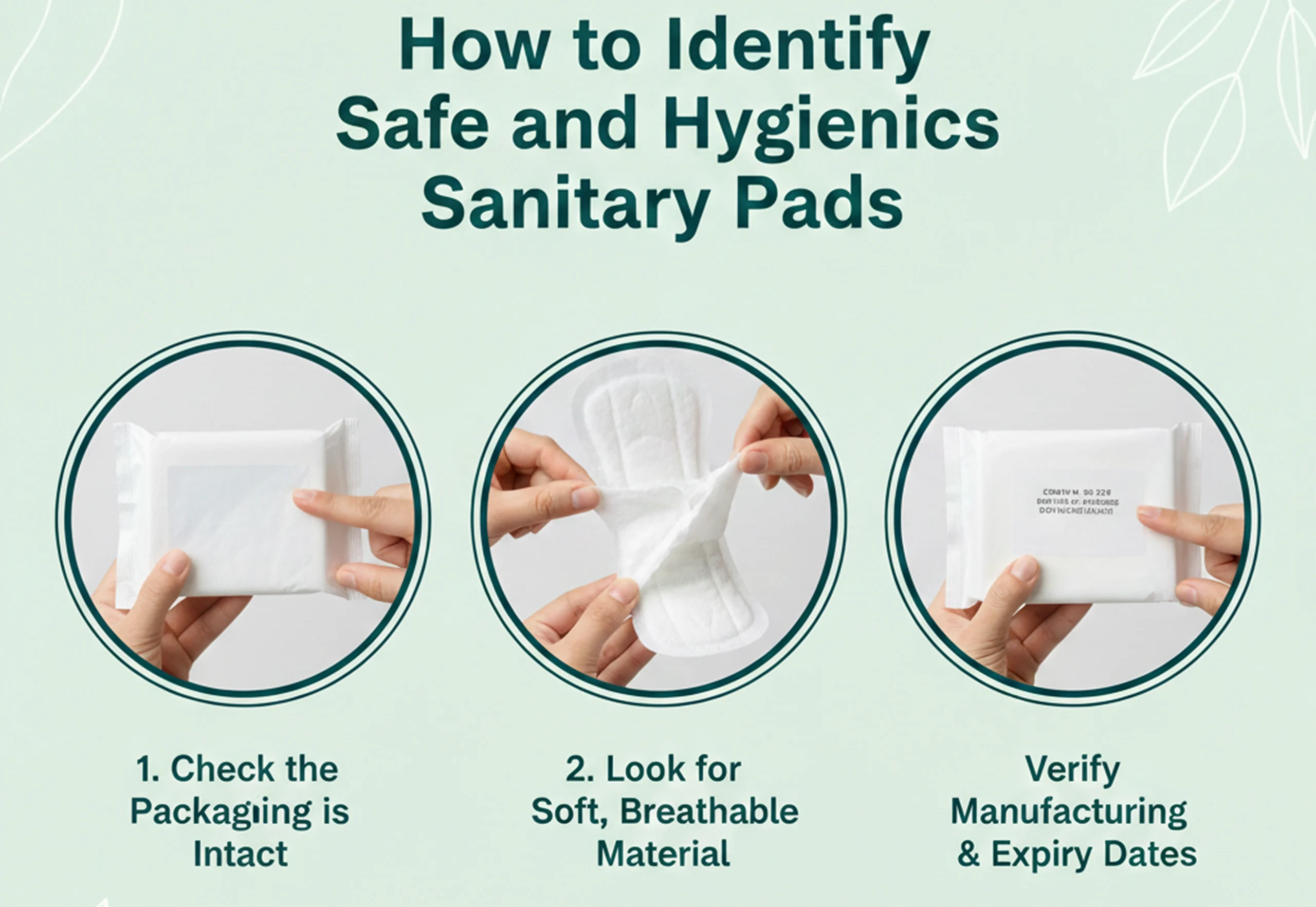
Cotton or cotton-feel top over pads are assumed to be softer on the skin. They permit greater ventilation and less friction, which leads to irritation prevention.
Avoid Harmful Chemicals
Safe sanitary pads must be devoid of:
Chlorine bleaching
Harsh synthetic fragrances
Known irritants
There are better pads that explicitly state that they are either dermatologically tested or contain no harmful chemicals.
Look for Proper Absorbency and Breathability
The sanitary pad used should be hygienic and able to absorb the blood during the menstrual period, but leave the surface dry. The lack of proper absorbency may result in leakage and the extent of dampness that serves as a breeding ground for bacteria.
Some of the main characteristics that should be observed are:
Velocity cores that trap moisture.
Even distribution of fluid
Gas-permeable coverings that permit air flow.
Balanced absorbency provides protection and comfort of the skin during the day or night.
Check for Quality Certifications and Brand Transparency
Reputable brands tend to be of high manufacturing and hygienic standards. A packaging must always include:
Obvious ingredient or material facts.
The process of production and expiry dates.
Quality or safety certification.
Transparency in the materials and testing processes used by the brands would put them in a better position to provide hygienic and reliable products.
Avoid Strong Fragrances and Artificial Additives
Although scented pads might be attractive, strong perfumes can cause irritation of the sensitive skin and interfere with the natural pH of the intimate area. Hygiene professionals will suggest unscented or lightly scented pads, particularly when they will be used frequently.
To minimize the risk of allergic reactions, it is best to choose fragrance-free ones, and keep your intimate health good.
Ensure Proper Packaging and Storage
Even sanitary pads of high quality could be unsafe if they are not packed or stored properly. Hygienic pads should be:
Individually wrapped
Covered with a cap to avoid dust and moisture.
Holden in untainted surroundings.
The packaging should always be checked before use, and one should not use pads with cracks or wrappers that are not closed.
Consider Comfort and Fit
Safety is also concerned with comfort. Pad (sliding, piled up, frictional) pads may result in chafing and irritation. A well-designed pad should:
Stay in place
Select your flow level (light, regular, heavy)
Moveable and comfortable during wear.
The correct selection of the size and type will guarantee hygiene and confidence.
Expert Advice on Choosing Safe Sanitary Pads
Health practitioners suggest that the use of sanitary pads should be taken according to the needs of a person, not according to trends or price. The body of every person reacts in a different way, and this is why it is important to be attentive to comfort, skin reaction, and performance.
Experts also suggest:
Changing pads every 4–6 hours
Prevention of long-term pad use.
Check on any skin reactions and change products in case of irritation.
Safe menstrual habits are accompanied by the selection of the appropriate sanitary pad.
Final Thoughts
Finding safe, hygienic sanitary pads is one of the steps to improving the health process of menstruation and well-being. Concentrating on materials, absorbency, breathability, and brand transparency, people will be able to make strong decisions that will save sensitive skin and keep hygiene at the proper level.
A secure, hygienic pad must be comfortable and do its job efficiently and without any irritation and discomfort to intimate health. By spending time to select the appropriate product, one can have a healthier and more confident menstrual cycle every cycle.